
Department stores have been a cornerstone of the retail industry for over a century. They offer customers the convenience of purchasing a wide variety of products under one roof, from clothing and cosmetics to electronics and home goods. Unlike specialty shops that focus on a single product category, department stores are designed to provide a comprehensive shopping experience with multiple product sections organized into different departments.
Today, department stores exist both in physical locations and online platforms, adapting to changing consumer preferences and technological advancements. Major retailers such as Macy’s, Nordstrom, and Marks & Spencer have helped shape the modern department store model, combining traditional retail practices with digital innovation.
Table of Contents
What Is a Department Store?
A department store is a large retail establishment that sells a wide range of products organized into separate sections or departments. Each department focuses on a specific category of goods, such as clothing, cosmetics, electronics, home decor, or furniture.
The main goal of a department store is to provide a one-stop shopping destination, allowing customers to purchase multiple types of products during a single visit.
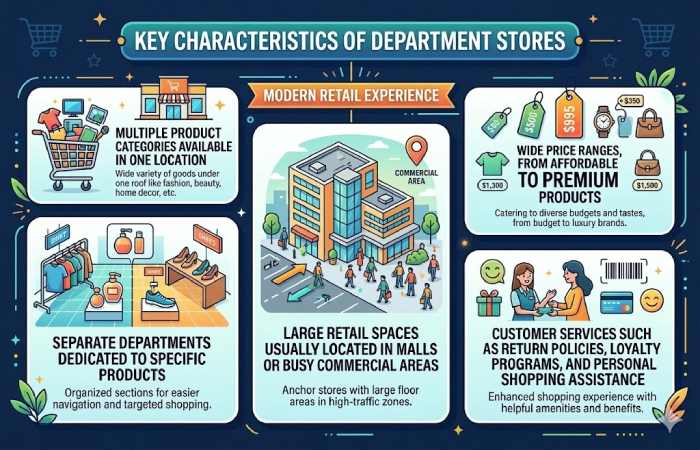
Key Characteristics of Department Stores
Department stores share several important features:
How Department Stores Work?
Department stores operate by dividing the store into specialized sections managed by staff who understand the products in their department. For example, the cosmetics department may offer beauty consultations, while the electronics department may provide product demonstrations.
Many department stores also partner with well-known brands to sell branded merchandise within the store.
History and Evolution of Department Stores
The concept of the department store began in the 19th century, when retailers started combining different product categories within a single large store. These stores quickly became popular because they made shopping easier and more efficient.
| Period | Key Development | Impact on Retail |
| Early 1800s | Emergence of large retail stores selling multiple product categories | Introduced the concept of centralized shopping |
| Mid-1800s | First modern department stores opened in Europe and the United States | Fixed pricing and organized product sections became common |
| Late 1800s | Window displays and seasonal sales introduced | Attracted more customers and increased retail competition |
| Early 1900s | Expansion of large flagship department stores in major cities | Department stores became shopping landmarks |
| Mid-1900s | Growth of shopping malls and suburban retail centers | Department stores became anchor stores in malls |
| Early 2000s | Rise of e-commerce platforms | Online shopping began competing with physical stores |
| Present Day | Omnichannel retail combining online and offline shopping | Customers can shop digitally and pick up in stores |
Types of Department Stores
Department stores can be categorized based on their pricing, product range, and target customers.
| Type of Department Store | Description | Target Customers | Examples |
| Luxury Department Stores | Offer premium brands, designer collections, and exclusive products | High-income shoppers | Selfridges, Nordstrom |
| Mid-Range Department Stores | Provide a balance between quality and affordability | Middle-income consumers | Marks & Spencer |
| Discount Department Stores | Focus on low prices and promotional deals | Budget shoppers | Value-oriented retail chains |
| Specialty Department Stores | Focus on specific product segments like fashion or electronics | Niche market customers | Fashion-focused retailers |
| Online Department Stores | Digital platforms selling products across multiple categories | Online shoppers | Amazon-style marketplaces |
Common Departments Inside a Department Store
Department stores are organized into specialized sections to make shopping easier for customers.
| Department | Products Offered | Key Features | Typical Customers |
| Clothing & Fashion | Men’s wear, women’s wear, kids’ clothing, footwear | Largest section with seasonal collections | Fashion shoppers |
| Beauty & Cosmetics | Skincare, makeup, perfumes, grooming products | Often includes beauty consultation counters | Beauty and skincare buyers |
| Home & Furniture | Bedding, kitchenware, furniture, home decor | Focus on household needs | Homeowners and families |
| Electronics & Appliances | Smartphones, headphones, small appliances | Product demonstrations and technical assistance | Tech enthusiasts |
| Jewelry & Accessories | Watches, jewelry, handbags, belts | Premium brands and luxury items | Gift buyers and luxury shoppers |
| Food & Gourmet Section | Imported foods, snacks, beverages | Specialty food items | Food enthusiasts |
Benefits of Shopping at Department Stores
Department stores provide several advantages compared to smaller retail shops.
| Benefit | Explanation | Example |
| One-Stop Shopping | Customers can buy many product categories in one location | Clothing, cosmetics, and home goods in a single store |
| Wide Product Variety | Stores offer multiple brands and product options | Multiple clothing brands available |
| Convenience | Organized departments make shopping easier | Clear sections for fashion, electronics, etc. |
| Seasonal Discounts | Regular sales events reduce prices | Holiday or clearance sales |
| Brand Availability | Access to well-known brands in one location | International and local brands |
| Customer Services | Returns, loyalty programs, and assistance | Personal shopping services |
| Shopping Experience | Comfortable store environment with displays | Visual merchandising and promotions |
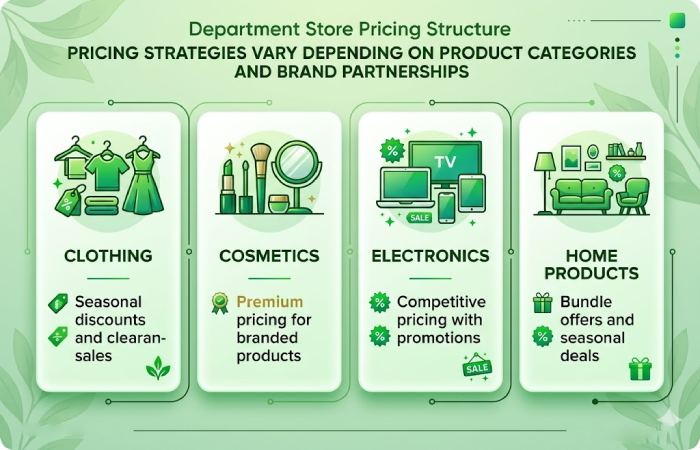
Department Store Pricing Structure
Pricing strategies vary depending on product categories and brand partnerships.
Role of Branding in Department Stores
Branding plays a crucial role in attracting customers and building trust.
Store Identity and Customer Trust: Strong branding helps department stores create a recognizable identity and loyal customer base.
Private Labels and In-House Brands: Many department stores create their own private-label products, which are often more affordable than external brands.
Brand Partnerships with Designers: Collaborations with designers and global brands allow stores to offer exclusive products that attract shoppers.
Department Store Marketing Strategies
Successful department stores use multiple marketing techniques to attract customers.
In-Store Promotions: Retailers often display products in visually appealing ways to encourage impulse purchases.
Loyalty Programs: Many department stores offer loyalty programs that reward customers with points, discounts, or exclusive deals.
Digital Marketing: Social media advertising, email campaigns, and mobile apps help department stores connect with modern shoppers.
Influencer and Celebrity Collaborations: Partnerships with influencers and celebrities help promote new products and increase brand visibility.
Department Store vs Mall vs Supermarket Comparison
| Feature | Department Store | Shopping Mall | Supermarket |
| Definition | A large retail store divided into multiple departments selling different product categories | A large complex containing multiple independent retail stores, restaurants, and entertainment venues | A retail store primarily focused on selling food and household products |
| Ownership | Usually owned and operated by a single company | Contains many different stores owned by separate businesses | Typically owned by one company |
| Product Range | Clothing, cosmetics, electronics, home goods, accessories | Wide variety depending on stores inside the mall | Groceries, fresh produce, packaged food, household essentials |
| Store Layout | Organized into internal departments | Multiple stores arranged within a large building | Aisle-based layout focusing on food and daily items |
| Shopping Experience | Focus on branded products and organized departments | Entertainment, shopping, and dining combined | Fast and convenient grocery shopping |
| Target Customers | Shoppers looking for fashion, lifestyle, and home products | Families and shoppers seeking variety and entertainment | Customers purchasing everyday groceries |
| Pricing | Medium to premium pricing | Varies depending on stores | Generally budget-friendly |
| Examples | Macy’s, Marks & Spencer | Large malls like Mall of America | Grocery chains like Walmart |
Top Global Department Stores with Revenue
| Rank | Department Store | Headquarters | Estimated Annual Revenue | Founded | Key Products |
| 1 | Macy’s | United States | €21.5 billion | 1858 | Fashion, cosmetics, home goods |
| 2 | El Corte Inglés | Spain | €16.3 billion | 1940 | Clothing, electronics, groceries |
| 3 | Kohl’s | United States | €15.4 billion | 1962 | Apparel, footwear, home products |
| 4 | Marks & Spencer | United Kingdom | €15+ billion | 1884 | Clothing, beauty, food products |
| 5 | Nordstrom | United States | €13.2 billion | 1901 | Luxury fashion, accessories |
| 6 | Falabella | Chile | €9.7 billion | 1889 | Fashion, electronics, home goods |
| 7 | Signa Holding | Austria | €8.5 billion | 2000 | Department stores and retail chains |
| 8 | Isetan Mitsukoshi Holdings | Japan | €7.2 billion | 1673 | Fashion, luxury goods |
| 9 | JCPenney | United States | €6.3 billion | 1902 | Clothing, home furnishings |
| 10 | Dillard’s | United States | €6+ billion | 1938 | Apparel, cosmetics, home products |
Leading Department Stores in India
India has a growing retail sector with several major department store chains.
Popular examples include:
- Shoppers Stop
- Reliance Retail
- Lifestyle International
These retailers operate stores in large shopping malls and major metropolitan cities, offering fashion, beauty products, and home goods.
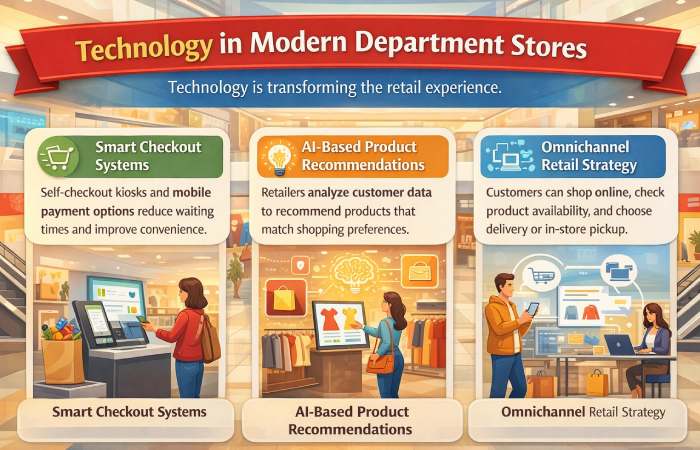
Technology in Modern Department Stores
Technology is transforming the retail experience.
- Smart Checkout Systems
- AI-Based Product Recommendations
- Omnichannel Retail Strategy
Challenges Facing Department Stores
Despite their popularity, department stores face several challenges.
Competition from E-Commerce: Online shopping platforms offer convenience and competitive pricing.
Rising Operating Costs: Rent, staffing, and inventory management costs can be high for large retail spaces.
Changing Consumer Preferences: Modern shoppers often prefer fast online purchases instead of traditional in-store experiences.
Future Trends in Department Store Retail
The future of department stores will likely include several major innovations.
Experiential Shopping: Stores are creating engaging experiences such as fashion shows, product demonstrations, and interactive displays.
Sustainable Products: Consumers increasingly prefer environmentally friendly products and packaging.
Integration of Online and Offline Shopping: The combination of digital technology with physical retail stores will continue to shape the industry.
Tips for Choosing the Best Department Store
When selecting a department store to shop at, consider the following factors:
- Product variety and availability of trusted brands
- Pricing and discount offers
- Customer service and return policies
- Store location and accessibility
A good department store should provide both quality products and a pleasant shopping experience.
Conclusion
Department stores remain an important part of the global retail landscape. By offering a wide range of products, convenient shopping environments, and attractive promotions, they continue to attract millions of customers each year.
Retailers that successfully combine strong branding, modern technology, and customer-focused services will continue to thrive in the evolving retail market. As shopping habits change, department stores that adapt to digital trends and provide unique in-store experiences will remain competitive in the years ahead.