

Table of Contents
Introduction: From Responsibility to Strategy
Stewardship in business has moved far beyond corporate social responsibility—it is now a core driver of long-term competitiveness. While Michigan serves as a powerful case study due to its transition from heavy industry to sustainability-focused innovation, the principles and outcomes of stewardship apply globally across sectors.
At its core, stewardship is about managing resources responsibly today to create sustainable value tomorrow. Companies that embrace this mindset are seeing measurable gains in efficiency, innovation, and trust—while those that ignore it face rising costs and risks.
What Is Business Stewardship?
Business stewardship refers to the responsible and ethical management of environmental, social, and financial resources to ensure long-term sustainability and stakeholder value.
Core Dimensions of Stewardship
| Dimension | Description | Global Business Impact |
| Environmental | Reducing emissions, conserving resources | Lower costs, regulatory compliance |
| Social | Employee welfare, community engagement | Talent retention, brand loyalty |
| Governance | Transparency, ethics, accountability | Investor confidence, risk reduction |
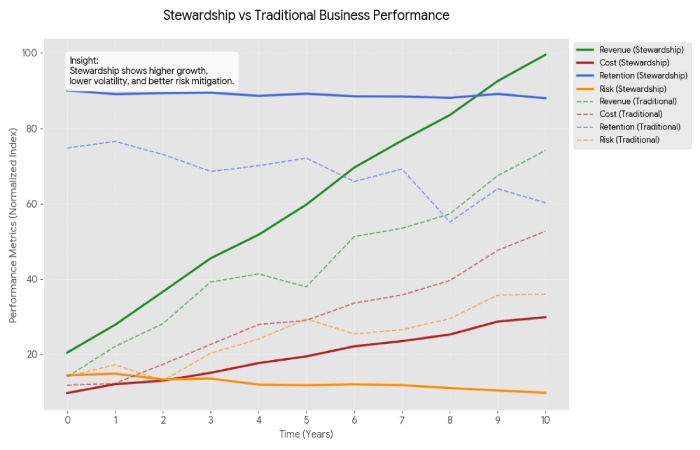
Stewardship vs Traditional Business Model
| Factor | Traditional Model | Stewardship Model |
| Time Horizon | Short-term profits | Long-term value |
| Resource Use | Extractive | Sustainable/regenerative |
| Stakeholders | Shareholders only | Multi-stakeholder |
| Risk Approach | Reactive | Proactive |
Why Michigan Matters
Michigan’s transformation from an industrial powerhouse to a sustainability-driven economy provides a blueprint for businesses worldwide.
| Period | Focus | Business Mindset |
| Pre-2000 | Industrial growth | Profit-first |
| 2000–2015 | Efficiency | Compliance-driven sustainability |
| 2015–Present | Stewardship | Integrated ESG strategy |
Michigan’s advantage lies in its ability to scale sustainability within legacy industries, proving that stewardship is not limited to startups or tech companies—it is viable even in capital-intensive sectors.
Environmental Stewardship in Practice
Environmental stewardship is often the most visible aspect of responsible business practices.
| Strategy | Traditional Approach | Stewardship Approach | Outcome |
| Energy Use | Fossil fuels | Renewable energy | Lower emissions, cost savings |
| Waste | Linear disposal | Circular reuse | Reduced waste |
| Water | High consumption | Conservation systems | Resource efficiency |
Businesses adopting renewable energy and circular systems often see simultaneous environmental and financial gains, demonstrating that sustainability and profitability are not mutually exclusive.
Social Stewardship: Investing in People and Communities
Stewardship extends beyond environmental impact to include human capital and societal contributions.
Social Impact Initiatives
| Initiative | Business Benefit |
| Workforce training | Increased productivity |
| Local sourcing | Stronger community ties |
| Diversity programs | Innovation and resilience |
Employee-Centric Policies
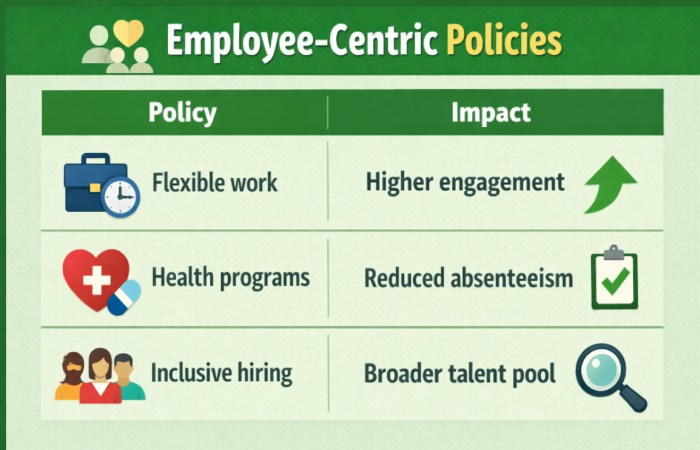
Organizations that prioritize social stewardship consistently outperform peers in employee retention and innovation output.
Governance: The Foundation of Trust
Governance ensures that stewardship is measurable, transparent, and accountable.
| Practice | Outcome |
| ESG reporting | Investor trust |
| Ethical sourcing | Risk mitigation |
| Board oversight | Strategic alignment |
The Global ROI of Stewardship
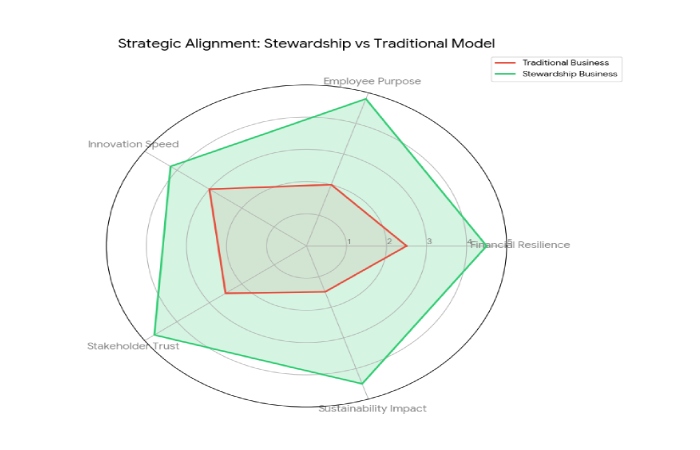
Stewardship is increasingly backed by measurable financial returns.
| Metric | Traditional Business | Stewardship Business |
| Operational Costs | High | Optimized |
| Customer Loyalty | Moderate | High |
| Risk Exposure | High | Reduced |
| Innovation Rate | Moderate | High |
Studies show that 90% of companies report positive returns from ESG investments, often within a few years, according to an Infosys ESG ROI study.
The “Cost” of Not Being a Steward
Ignoring stewardship creates compounding risks.
| Risk Type | Impact |
| Regulatory | Fines and compliance costs |
| Financial | Higher capital costs |
| Reputation | Loss of trust |
| Talent | Difficulty hiring |
| Operational | Inefficiency |
The cost of inaction is often higher than the cost of implementation, making stewardship a defensive as well as offensive strategy.
The “5 T’s” of Holistic Stewardship
A globally applicable framework for implementation.
| T | Meaning | Application |
| Time | Long-term thinking | Sustainable planning |
| Transparency | Open communication | ESG reporting |
| Technology | Innovation | Clean energy, AI |
| Talent | Workforce focus | Training, diversity |
| Trust | Stakeholder confidence | Ethical governance |
Stewardship in Specialized Industries
Stewardship varies by sector but remains universally relevant.
| Industry | Focus Area | Outcome |
| Manufacturing | Energy efficiency | Cost reduction |
| Finance | ESG investing | Portfolio resilience |
| Healthcare | Ethical practices | Compliance, trust |
| Technology | Data efficiency | Innovation |
| Agriculture | Sustainable farming | Long-term yield |
Sector-specific strategies are essential—what works in manufacturing may not apply directly to finance, but the principles remain consistent.
Impact in Different Spheres
Stewardship creates ripple effects across multiple dimensions.
| Sphere | Impact | Example |
| Economic | Revenue growth | Efficiency savings |
| Environmental | Emission reduction | Renewable energy |
| Social | Community development | Local hiring |
| Organizational | Culture improvement | Employee engagement |
| Global | Supply chain ethics | Sustainable sourcing |
Paid Resources and Education
Organizations are investing in structured learning to implement stewardship effectively.
| Institution | Program | Focus |
| University of Michigan | Sustainability Leadership | ESG strategy |
| Harvard Business School | Sustainable Business | Governance |
| INSEAD | Impact Investing | Finance |
| Coursera/edX | ESG Certifications | Foundational skills |
Competitive Advantage of Stewardship
Stewardship is now a differentiator in global markets.
| Advantage | Business Impact |
| Brand trust | Customer loyalty |
| ESG compliance | Market access |
| Innovation | Product development |
| Talent attraction | Skilled workforce |
| Risk reduction | Stability |
Implementation Blueprint
| Step | Action | Result |
| 1 | Assess current practices | Identify gaps |
| 2 | Set ESG goals | Strategic clarity |
| 3 | Invest in technology | Efficiency |
| 4 | Train workforce | Adoption |
| 5 | Report progress | Trust |
Future Outlook: Global Trends
Michigan reflects broader global shifts.
| Trend | Impact |
| Electrification | Lower emissions |
| Circular economy | Resource efficiency |
| Green finance | Investment growth |
| ESG analytics | Data-driven decisions |
FAQs
What is stewardship in business?
Responsible management of resources for long-term value.
Is stewardship profitable?
Yes, with measurable ROI and risk reduction.
Why is it important globally?
Due to regulatory, consumer, and investor pressures.
Can small businesses adopt it?
Yes, through scalable and low-cost initiatives.
Final Verdict
Stewardship is no longer optional—it is foundational. Michigan businesses demonstrate that even traditional industries can evolve into sustainability leaders, offering a blueprint for companies worldwide. stewardship is not just about doing good—it is about doing better business.